
b站
Turkish Ambassador expresses willingness to join hands with China to ‘forge a brighter future’ in signed article in the Global Times_我的网站

一 |
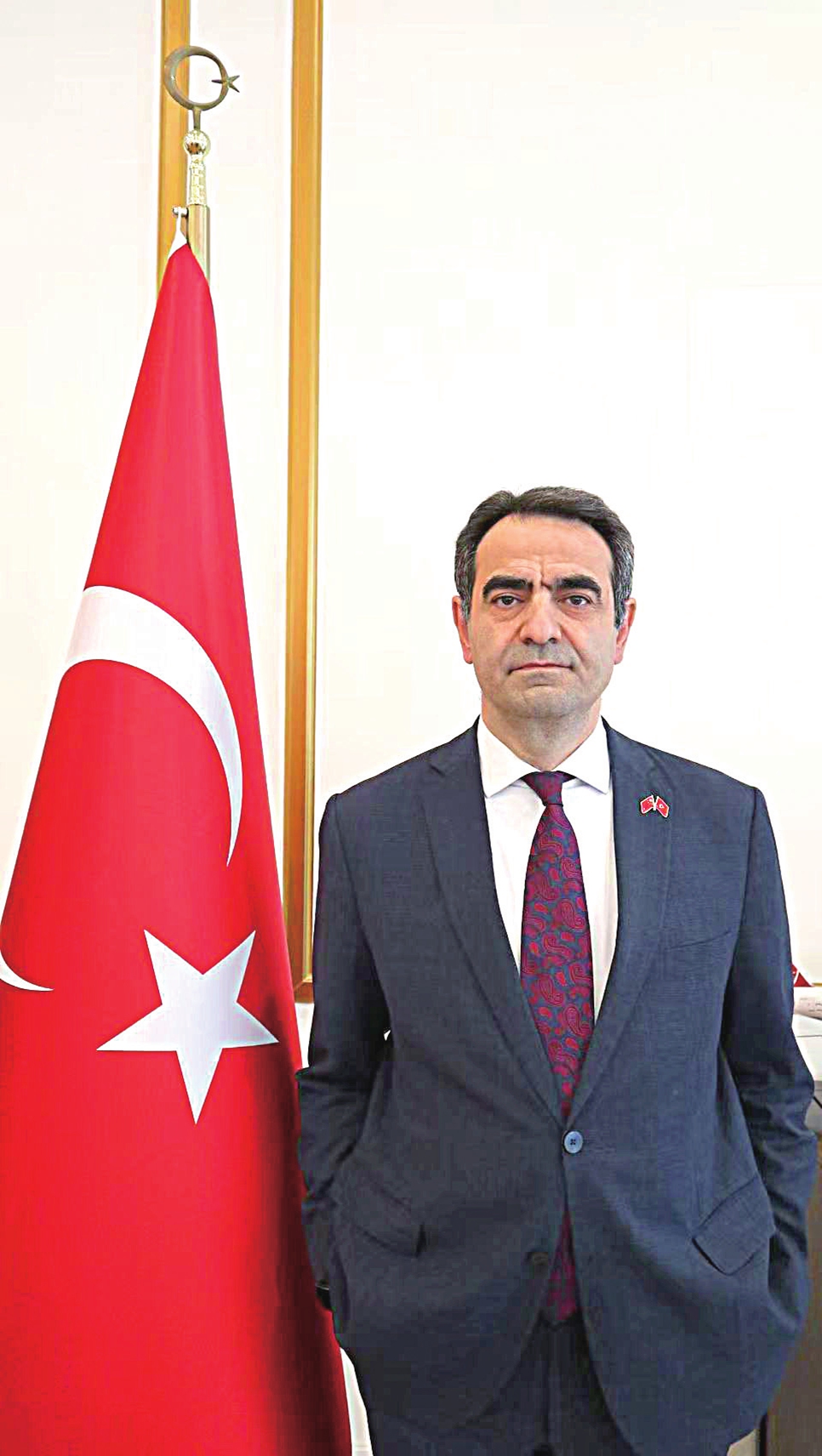
Since modern times, both countries have undergone profound changes and social transformations. Their similar historical experiences have fostered mutual understanding. Upholding their longstanding tradition of friendship, bilateral relations between Türkiye and China have steadily advanced. The two countries formally established diplomatic relations in 1971, opening a new chapter in the development of bilateral ties.
High-level strategic guidance is the fundamental guarantee for the steady and long-term development of Türkiye-China relations. The two heads of state attach great importance to bilateral relations and are committed to continuously enhancing the quality and level of friendly cooperation between Türkiye and China, having built consensus through multiple meetings.
The meeting between the two leaders in Tianjin during the Shanghai Cooperation Organization Summit on August 31, 2025, which charted the course for the development of bilateral relations, serves as powerful proof of their sustained high-level dialogue. Türkiye consistently and firmly adheres to the one-China principle and supports China in safeguarding its national sovereignty and territorial integrity.
Under the joint guidance of the two heads of state, practical economic and trade cooperation between Türkiye and China has continued to develop. Cooperation on connectivity has deepened and yielded tangible results, with active efforts to align Türkiye's Middle Corridor Initiative with the Belt and Road Initiative.

Over the past two decades, the volume of bilateral trade has grown approximately 40-fold, cross-border transport projects have increased, two-way investment has steadily expanded, and the areas of cooperation have broadened, all demonstrating the enduring resilience and vitality of this economic and trade partnership.
At present, there is still significant untapped potential for cooperation between Türkiye and China. By expanding two-way investment, optimizing trade structures, and broadening areas of collaboration, the two nations can foster a more balanced, diversified, and mutually beneficial economic and trade landscape, thereby fully unlocking this potential. In this vein, high-quality direct investments from China into our country will create a true win-win foundation for the sustainability of our economic relations, while offering Chinese companies significant advantages in terms of access to markets adjacent to Türkiye, achieving shared success.
People-to-people exchanges form a vital foundation of public support for the development of relations between Türkiye and China, with tourism being the strongest point of convergence in people-to-people ties.
In 2026, frequency of direct flights has increased to 56 times per week, strengthen direct connections for tourism, trade and business. Our decision, on the occasion of the 55th anniversary, to grant visa exemptions to Chinese citizens for touristic travel and transit - effective January 2, 2026 - fully demonstrates our strong commitment to increasing people-to-people contacts.
Today, our world is undergoing profound changes, with instabilities and uncertainties on a rise. Türkiye and China stand as two ancient civilizations that are influential in the region. Türkiye is committed to multilateralism and keeps strengthening its relations with China. Against the backdrop of complex and profound shifts in the international landscape, enhancing bilateral dialogue and cooperation is more important than ever, and the Türkiye-China relations rest on a solid foundation for continued development.
At the new starting point marked by the 55th anniversary of Türkiye-China ties, what needs to be done today is to translate political will into more concrete projects, efficient mechanisms and active private sector participation, thereby deepening and solidifying cooperation across different fields. We look forward to taking this occasion as an opportunity to join hands with China to forge a brighter future for bilateral relations.
The author is Turkish Ambassador to China
。 (ECNS) -- The rapid growth of artificial intelligence is driving a new wave of electricity demand, putting nuclear power back in the spotlight. China, which has the world's largest nuclear power capacity under construction, is accelerating the development of nuclear energy to provide reliable, low-carbon electricity for its growing economy and emerging AI industries. According to the National Energy Administration, China has 112 nuclear units in operation or approved, with a combined capacity of 125 million kilowatts — the highest globally. Its nuclear capacity under construction also ranks first worldwide. As China continues to expand its nuclear power fleet, which province leads the country in nuclear energy? And why is China stepping up investment in the sector? Guangdong Province has emerged as China's nuclear leader. In the first half of 2026, its nuclear generation reached 57.31 billion kilowatt‑hours, supported by a complete industry chain spanning design, equipment manufacturing, construction and operation. Guangdong has also developed a complete nuclear power industrial chain spanning design, equipment manufacturing, construction and operation. The State Council recently approved the third phase of the Taipingling Nuclear Power Plant in Guangdong, marking another major step in the province's nuclear expansion following the approval of five nuclear power projects, including the Taishan project, last year. With major nuclear power bases including Daya Bay, Ling'ao, Yangjiang, Taishan and Taipingling located along its coastline, Guangdong is expected to see nuclear power generation rise significantly as new units come online, helping meet growing electricity demand from industries such as AI and data centers. Fujian Province, meanwhile, has the highest share of nuclear power in its electricity generation mix. Nuclear energy accounted for 28.1% of the province's total power generation, according to the NEA, meaning nearly three in every 10 kilowatt-hours generated in Fujian came from nuclear power. With major nuclear power bases in Ningde, Fuqing and Zhangzhou, nuclear energy has become a key pillar of Fujian's power supply. The expansion of nuclear power is being driven in part by rapidly growing electricity demand in the age of artificial intelligence. In the United States, major technology companies are also turning to nuclear energy to secure reliable, low-carbon electricity. Microsoft has signed a 20-year agreement linked to the restart of the Three Mile Island nuclear plant, while Google has announced plans to procure power from small modular reactors. As AI development drives electricity demand higher, the convergence of artificial intelligence and nuclear power is beginning to reshape the global energy landscape. China is also part of this growing "AI + nuclear power" trend. As the clean energy transition gathers pace, the country's expanding nuclear power hubs are providing a stable source of electricity to support both its digital economy and broader green transformation. (By Gong Weiwei)

 。
。Current article:http://3kiyw86.bomanglangsugangunxileba.cyou/7s9g/20260826/4281.html
Published on:15:30:09


