
8090
Unitree Robotics IPO sparks investor frenzy as policy support fuels capital rush, with sector’s future value tied to continued commercialization_我的网站

A |
据央视新闻报道,5月13日,新加坡总理李显龙向总统尚达曼提交辞呈。李显龙在致信中表示,副总理黄循财已准备好领导新加坡,并宣布自己将于周三(5月15日)辞职。 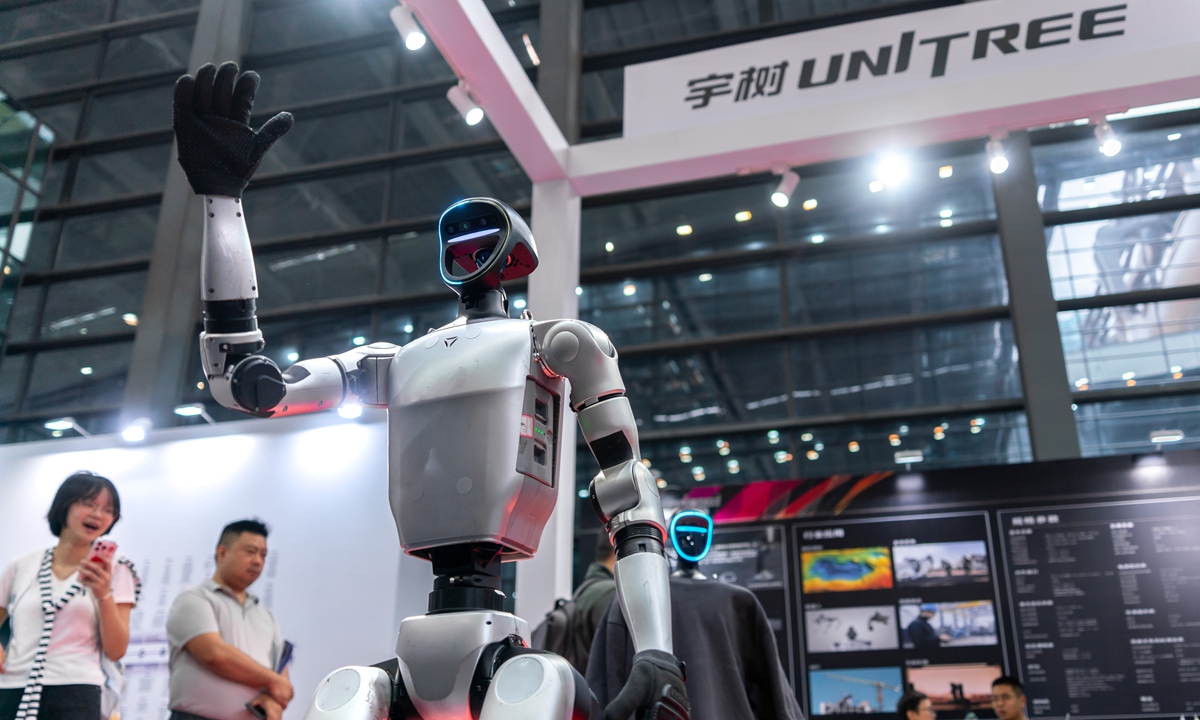
With just one day to go before Chinese humanoid robotics pioneer Unitree Robotics opens subscriptions for its initial public offering (IPO) on Shanghai's STAR Market, investor attention has extended far beyond the company itself, highlighting a broader capital-market rush into embodied intelligence as the sector moves from technological breakthroughs toward commercialization.
As of press time, discussions surrounding the IPO have pushed the topic to the top of trending lists across multiple stock trading platforms. The debate has focused on Unitree Robotics' disclosed short-term financial performance, as well as the potential opportunities for investors from China's policy push to include embodied intelligence and humanoid robots among key areas of medium- and long-term technology and industrial development.
Experts said the wave of IPOs among robotics companies, including Unitree Robotics, represents a shift that allows robot makers to engage more directly with public markets and investors. It also brings companies at different stages of development and pursuing different technological paths into a common valuation framework, promoting market comparisons and competition.
At the same time, the capital-market boom is likely to accelerate a shakeout, separating companies capable of building sustainable business models from those that struggle to turn technological advances into commercial returns.
On Thursday, Unitree Robotics released its announcement on the IPO of shares and listing on the STAR Market. According to the announcement, the offering price was set at 150.80 yuan per share, valuing the company at approximately 61 billion yuan ($9.04 billion) upon listing.
Secondary-market professionals told the Global Times that demand for Unitree Robotics' IPO subscription could be extremely high, meaning the chances of individual investors securing shares are likely to be very limited.
Robotics is currently one of the few categories that can translate AI capabilities into tangible assets with relatively comparable valuation metrics, creating a unique advantage in valuation narratives. This scarcity is one of the key factors drawing the attention of both large and small investors, Tian Feng, former dean of SenseTime's Intelligence Industry Research Institute, told the Global Times on Sunday.
Unlike large language model companies, whose capabilities are often assessed through benchmarks and demonstrations that are difficult for ordinary secondary-market investors to directly evaluate, robots offer visible and verifiable evidence through tasks such as grasping, walking and dexterous manipulation, Tian said. This tangible demonstration of "embodied" intelligence naturally creates a valuation premium in market narratives, he added.
Tian cautioned that extreme subscription figures, such as RobotHoenix's 14,855-fold oversubscription on its listing and LDRobot's 127.62 percent first-day share price surge, were driven by a combination of institutional advantages and sector scarcity rather than serving as evidence of the commercial validation of robotics products. He noted that there is no direct correlation between oversubscription multiples and the certainty of product deliveries or commercialization prospects.
Beyond Unitree Robotics, a broader financing boom in China's robotics industry has also gained significant momentum, with the Hong Kong Stock Exchange emerging as the main battleground for this latest IPO wave.
Citing industry data provider Wind, the China STAR Market reported that five robotics-related companies have gone public in Hong Kong so far in 2026. Meanwhile, 51 companies with businesses spanning industrial robots, service robots and embodied intelligence solutions are currently in the IPO pipeline in Hong Kong, accounting for 12.7 percent of all companies awaiting listing.
According to data from IT industry research platform ITjuzi.com, financing in China's embodied intelligence sector totaled 93.5 billion yuan in the first half of 2026, surpassing 90 billion yuan and marking a fivefold increase from the same period in 2025. The number of financing deals reached 322, up 137 percent year-on-year.
Tian said that while policy support and clearer commercialization pathways are boosting confidence in the sector, the latest IPO wave should also be viewed through a more cautious lens. The surge comes partly as the primary market's ability to continue funding embodied intelligence companies faces limits, prompting firms to seek new liquidity channels through public markets, rather than solely reflecting a dramatic leap in industrial maturity.
As emerging technology sectors increasingly become the focus of public attention, more objective and professional analysis is also needed to help investors assess companies' technological capabilities, commercialization prospects and long-term value, rather than simply following market enthusiasm, Chinese experts noted.
。继上个月李显龙宣布由51岁的黄循财继任总理之后,这封辞职信成为新加坡政坛过渡到新一代领导层正式程序。
With just one day to go before Chinese humanoid robotics pioneer Unitree Robotics opens subscriptions for its initial public offering (IPO) on Shanghai's STAR Market, investor attention has extended far beyond the company itself, highlighting a broader capital-market rush into embodied intelligence as the sector moves from technological breakthroughs toward commercialization.
As of press time, discussions surrounding the IPO have pushed the topic to the top of trending lists across multiple stock trading platforms. The debate has focused on Unitree Robotics' disclosed short-term financial performance, as well as the potential opportunities for investors from China's policy push to include embodied intelligence and humanoid robots among key areas of medium- and long-term technology and industrial development.
Experts said the wave of IPOs among robotics companies, including Unitree Robotics, represents a shift that allows robot makers to engage more directly with public markets and investors. It also brings companies at different stages of development and pursuing different technological paths into a common valuation framework, promoting market comparisons and competition.
At the same time, the capital-market boom is likely to accelerate a shakeout, separating companies capable of building sustainable business models from those that struggle to turn technological advances into commercial returns.
On Thursday, Unitree Robotics released its announcement on the IPO of shares and listing on the STAR Market. According to the announcement, the offering price was set at 150.80 yuan per share, valuing the company at approximately 61 billion yuan ($9.04 billion) upon listing.
Secondary-market professionals told the Global Times that demand for Unitree Robotics' IPO subscription could be extremely high, meaning the chances of individual investors securing shares are likely to be very limited.
Robotics is currently one of the few categories that can translate AI capabilities into tangible assets with relatively comparable valuation metrics, creating a unique advantage in valuation narratives. This scarcity is one of the key factors drawing the attention of both large and small investors, Tian Feng, former dean of SenseTime's Intelligence Industry Research Institute, told the Global Times on Sunday.
Unlike large language model companies, whose capabilities are often assessed through benchmarks and demonstrations that are difficult for ordinary secondary-market investors to directly evaluate, robots offer visible and verifiable evidence through tasks such as grasping, walking and dexterous manipulation, Tian said. This tangible demonstration of "embodied" intelligence naturally creates a valuation premium in market narratives, he added.
Tian cautioned that extreme subscription figures, such as RobotHoenix's 14,855-fold oversubscription on its listing and LDRobot's 127.62 percent first-day share price surge, were driven by a combination of institutional advantages and sector scarcity rather than serving as evidence of the commercial validation of robotics products. He noted that there is no direct correlation between oversubscription multiples and the certainty of product deliveries or commercialization prospects.
Beyond Unitree Robotics, a broader financing boom in China's robotics industry has also gained significant momentum, with the Hong Kong Stock Exchange emerging as the main battleground for this latest IPO wave.
Citing industry data provider Wind, the China STAR Market reported that five robotics-related companies have gone public in Hong Kong so far in 2026. Meanwhile, 51 companies with businesses spanning industrial robots, service robots and embodied intelligence solutions are currently in the IPO pipeline in Hong Kong, accounting for 12.7 percent of all companies awaiting listing.
According to data from IT industry research platform ITjuzi.com, financing in China's embodied intelligence sector totaled 93.5 billion yuan in the first half of 2026, surpassing 90 billion yuan and marking a fivefold increase from the same period in 2025. The number of financing deals reached 322, up 137 percent year-on-year.
Tian said that while policy support and clearer commercialization pathways are boosting confidence in the sector, the latest IPO wave should also be viewed through a more cautious lens. The surge comes partly as the primary market's ability to continue funding embodied intelligence companies faces limits, prompting firms to seek new liquidity channels through public markets, rather than solely reflecting a dramatic leap in industrial maturity.
As emerging technology sectors increasingly become the focus of public attention, more objective and professional analysis is also needed to help investors assess companies' technological capabilities, commercialization prospects and long-term value, rather than simply following market enthusiasm, Chinese experts noted.
。继上个月李显龙宣布由51岁的黄循财继任总理之后,这封辞职信成为新加坡政坛过渡到新一代领导层正式程序。
尚达曼总统接受了李显龙和政府的辞呈,辞呈星期三(15日)生效。新总理将率领新内阁,在同一天宣誓就职。
李显龙在辞呈中写道,他原本计划在70岁时将权力移交给继任者,但新冠疫情打乱了这一时间表。“疫情过后,我们进行了选择我的继任者的程序。2022年4月14日,人民行动党(PAP)国会议员开会并一致认可黄循财先生为我的继任者。现在,两年过去了,他已准备好领导新加坡。”李显龙写道,他正式建议总统邀请黄先生组建下一届政府。

B |
尚达曼总统在回信中感谢2004年8月担任总理的李显龙从政四十多年的“无私服务”,称:“你们的责任感和正直、智慧和同情心树立了很高的标准,并将激励那些追随者。”“我相信,您的经验和建议将使新的领导团队受益,因为他们将规划我们历史的下一阶段,并创造一个更美好的新加坡。”尚达曼同时表示,“根据我的判断,我同意你的建议,黄循财先生是获大多数国会议员推举的国会议员。我打算在2024年5月15日委任他为总理,并邀请他组织下一任政府。”随后,他写信给黄循财,表示有意任命他为总理,并邀请他组建下一届政府。
新加坡《联合早报》报道,候任总理黄循财已接受总统邀请组织政府,他会委任贸工部长颜金勇为副总理,另一名副总理继续由王瑞杰担任。5月13日,黄循财宣布内阁改组,根据新内阁名单,黄循财接任总理后会继续掌管财政部;65岁的颜金勇升任副总理后也会继续管理贸工部,并替代黄循财担任新加坡金融管理局主席,与此同时负责总理府战略小组的工作,还会在总理缺席时担任代理总理职务;其他内阁部长的职务不变,63 岁的现任副总理王瑞杰将继续担任他的职务。
黄循财周一在总统府举行的新闻发布会上表示,随着政府本届任期即将结束,连续性和稳定性是“关键考虑因素”。

C | “所有部长都已经有一整套工作要做,有些还刚刚在各自的部门推出了新计划。

D | 为了避免任何干扰,我决定让他们继续担任目前的职务,直到任期结束。” 黄循财表示,这也是他本人即使在5月15日就任总理后仍将继续担任财政部长的原因。
对于颜金勇的晋升,黄循财说,他和颜先生“共同经历了疫情的火热洗礼”,颜金勇是“整个过程中的力量支柱”。他补充说,颜金勇在国际经济方面的经验将帮助新加坡在竞争更加激烈的全球环境中游刃有余。对于王瑞杰副总理,黄循财表示,他们在2011年同年进入政坛,曾在教育部和财政部共事。颜金勇和王瑞杰都是经验丰富的部长,他们将在最初的过渡时期“提供一双稳定的手”,并帮助指导年轻的政治官员。
黄循财在讲话中同时指出,他的新团队是一个有经验丰富的部长和年轻官员的“良好组合”,如果人民行动党(PAP)在本届政府任期结束后获得连任,他计划让该党的第四代(或称 4G)部长轮流担任不同的职务,“让他们有更广泛的接触和经验”。“但我们仍然需要更多新鲜血液,因为一些年长的部长可能会在本届任期结束时或不久后退休。因此,我正在积极寻找有潜力担任部长的新候选人。我的目标是通过新成员,尤其是三四十岁的男女成员,进一步更新和加强团队。

E | 对我来说,没有什么比组建一支最优秀的团队为新加坡和新加坡人民服务更重要的了。”黄循财表示。

F |
在回答关于不任命国防部第二部长作为现任国防部长黄永宏的继任者的问题时,黄循财重申,高级部长很可能“在未来的一段时间退休”,他将不得不为他们寻找继任者。“接班人不一定非要来自国防部。可以从我们现有的部长人才库中挑选”,他继续说道。

G |
此外,李显龙早前已接受黄循财邀请,卸任后留在内阁担任国务资政,他也会继续管理研究、创新与创业理事会(Research, Innovation and Enterprise Council)。

H | 李显龙日前接受媒体访问时说,卸任后会协助新总理顺利接棒,让黄循财能够以自己的方式与他的团队治理国家。
Current article:http://3kiyw86.bomanglangsugangunxileba.cyou/news/20260826_5049.html
Published on:07:24:31